
Hops – the green gold from the Mühlviertel region
From late August to mid-September, it's super busy for the hop farmers in the Mühlviertel Hop Growers' Cooperative. The hops, which they've been tending to and caring for over months, are ready to be harvested. But the farmers lay the groundwork for this back in spring, when the hop plants start to sprout.
“Guiding” and “ridging”
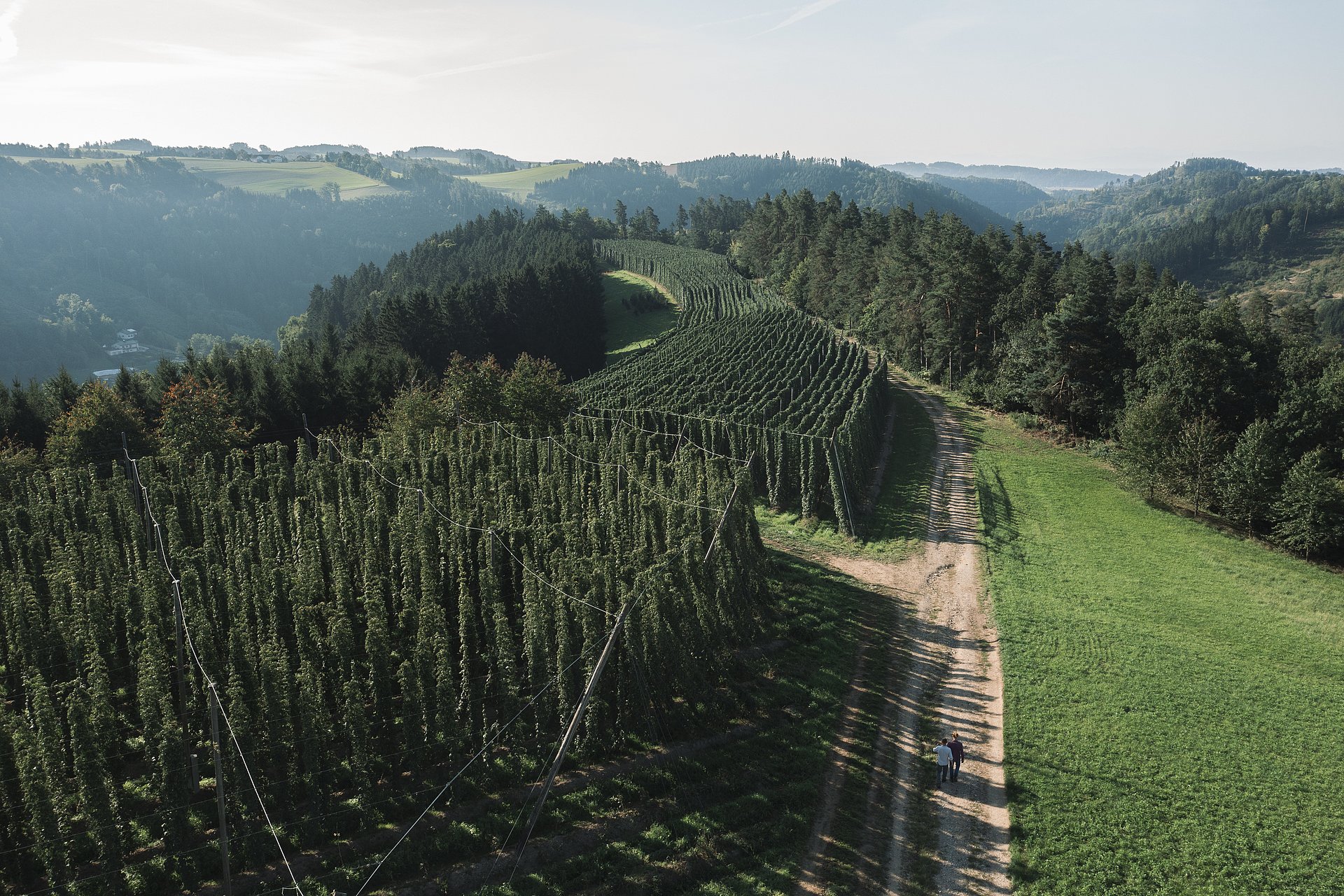
During the process known as “training,” the typical wire is attached to the plants. In addition, all shoots except for three are cut back and the remaining ones are guided onto the wire—all by hand. This makes the remaining shoots stronger and more resistant and concentrates the growth of the plant.
This is followed by “ridging,” in which the plant stock is covered with soil using a plow. “On the one hand, this prevents new shoots from sprouting, and on the other hand, it also keeps weeds at bay,” explains Manuel Starlinger, managing director of the hop-growing cooperative. This is because the hops should not have any competition for water when they grow up to 20 centimeters or more every day.
The ideal time
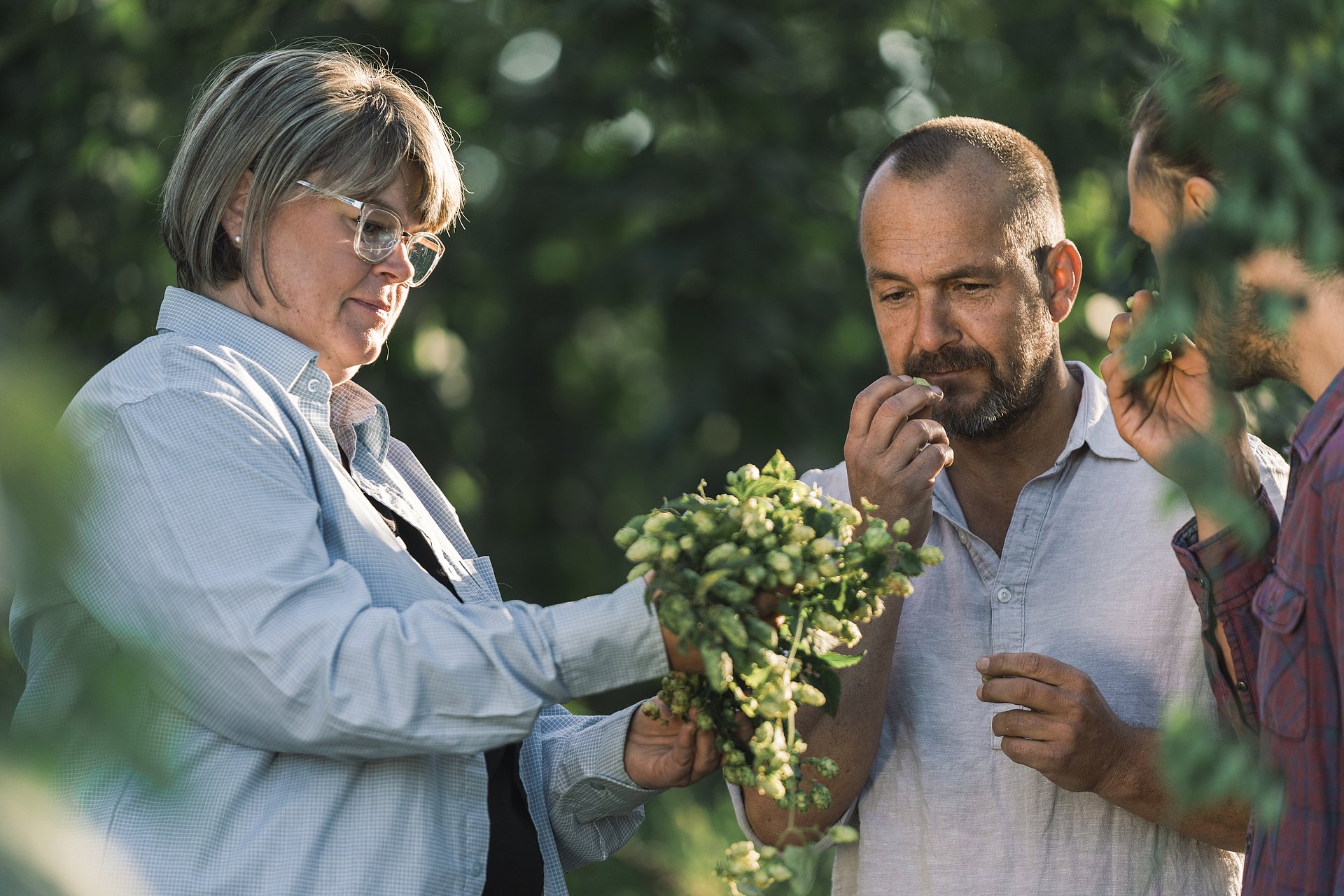
Knowledge and experience help farmers determine the right time for harvesting. When the cones—the fruits—are firm enough, speed is of the essence. This is because the right time for harvesting is a key factor in terms of quality—and therefore also decisive for the aroma that the hops will later impart to the beer. The higher the proportion of lupulin – the bitter substance in hops – the better the quality.
The best climate for hops
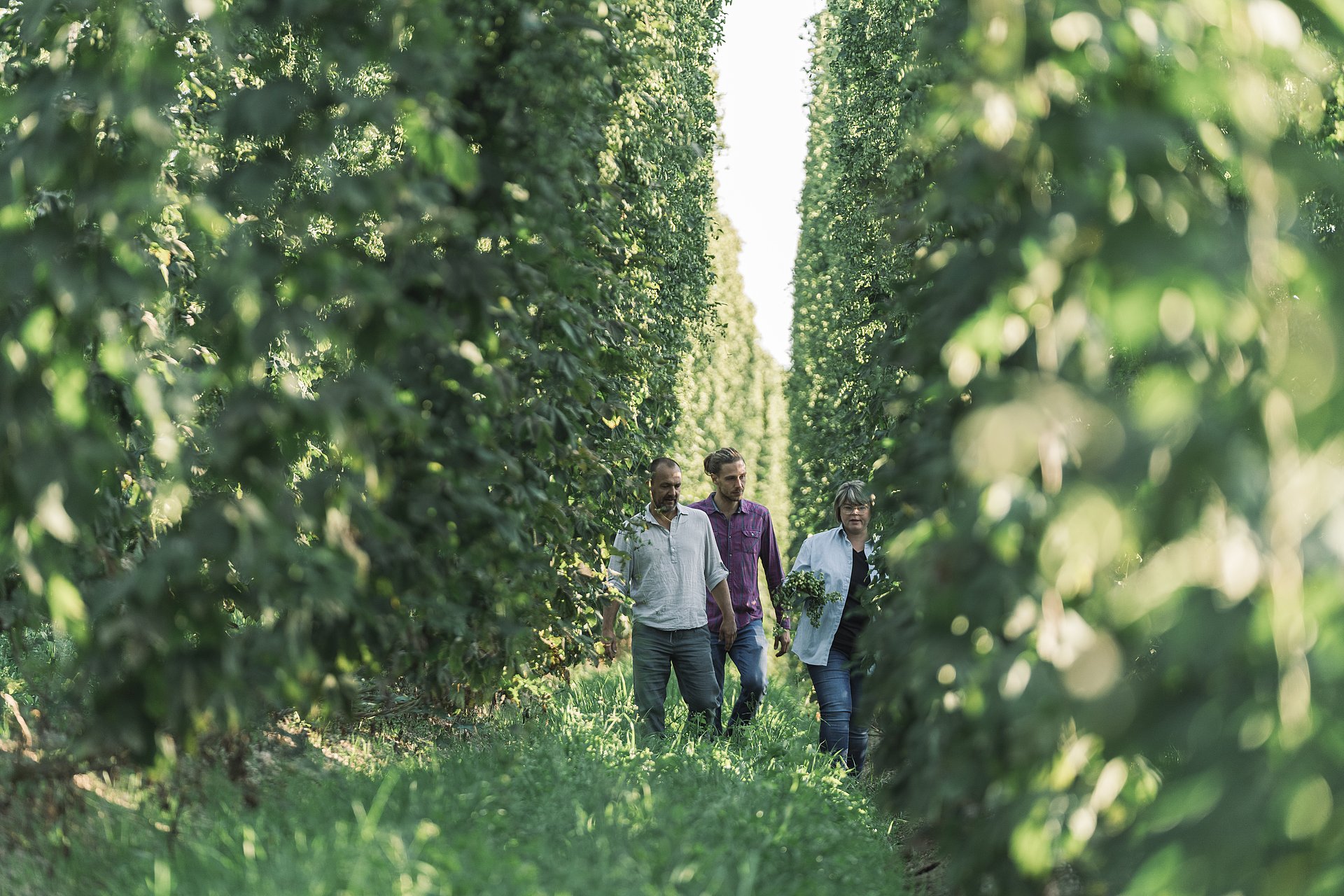
The fact that the Mühlviertel region is Austria's largest hop-growing area has to do with its unique climatic and geological characteristics. The special climate, with cool nights and warm days, causes the plants to produce more lupulin, which means the cones develop more aroma. The sandy, not overly moist soil is another reason why hops have thrived in the Mühlviertel region for centuries.
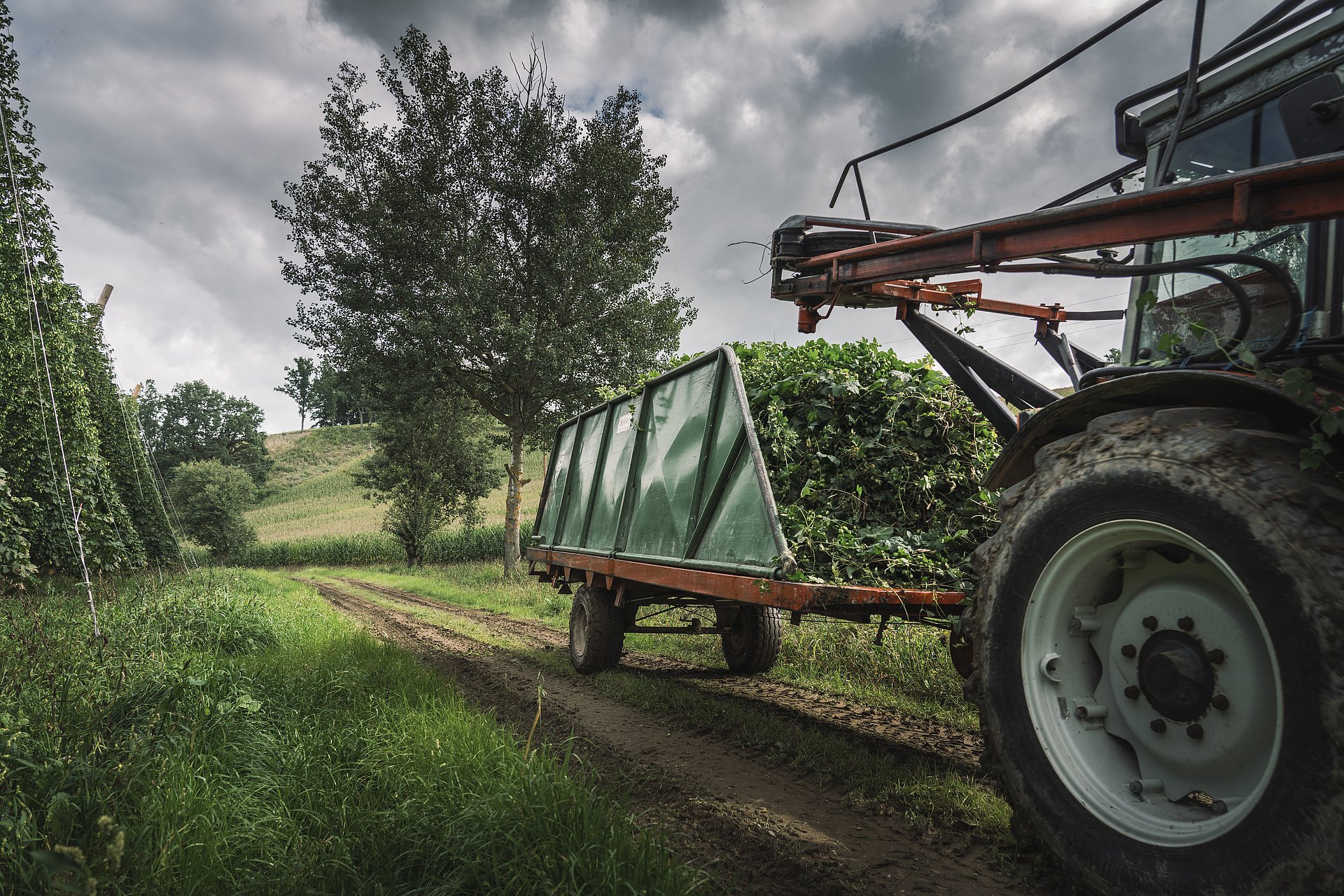
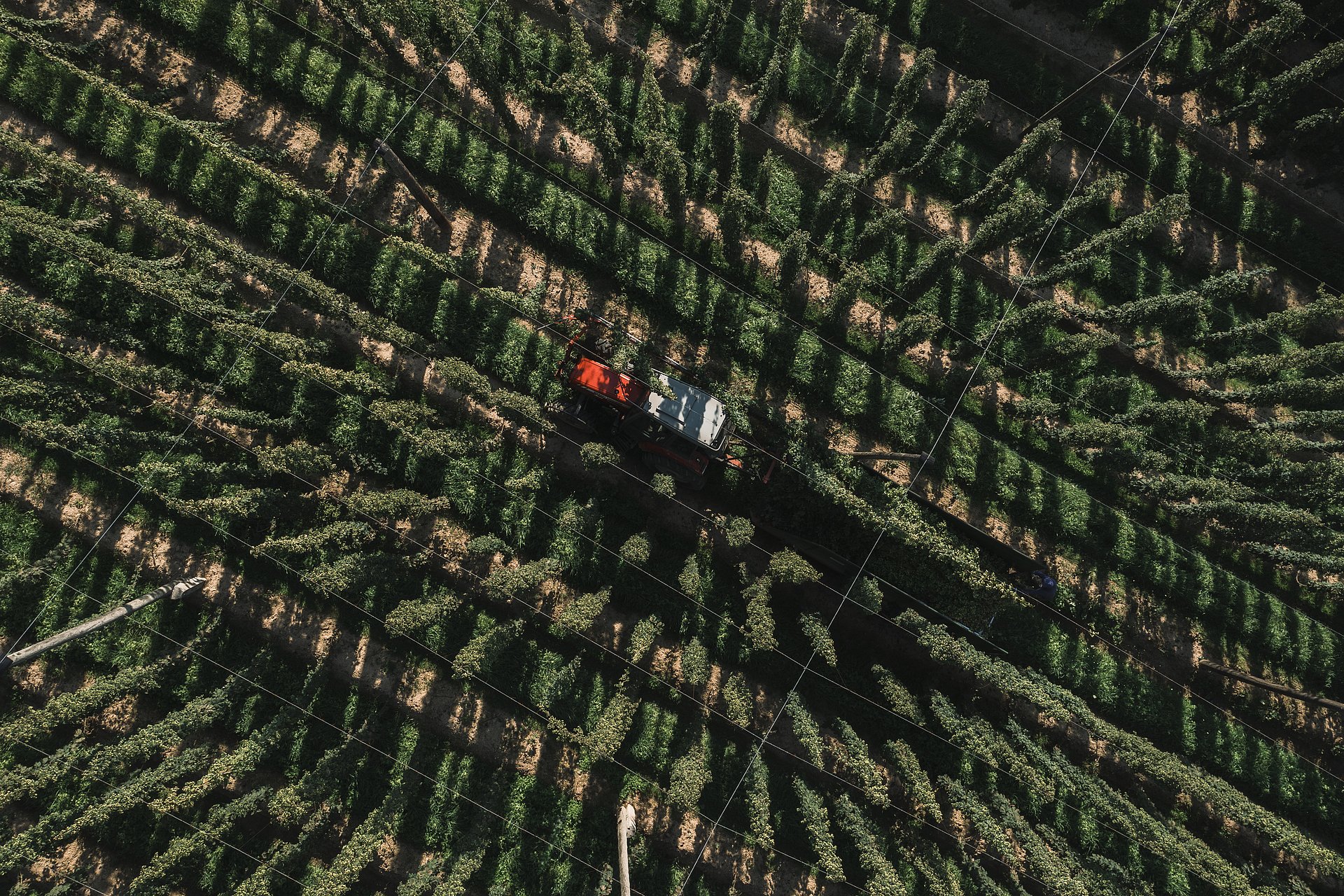
Once the cones are ripe, the harvesting machine is put to work, cutting the hop plants along with the wire and placing them on a trailer. Today, the picking machine separates the cones from the plants. Picking machines have made the work much easier; until the 1970s, entire village communities were busy with “hop picking” for days on end. The still-green hop cones are then dried and pressed into bales before being taken to the Mühlviertler Hopfenbaugenossenschaft (Mühlviertel Hop Growers' Cooperative) in Neufelden for further processing.
In autumn and winter, the hop bales are processed there for the breweries according to customer requirements. In this way, the hard work of the hop farmers ultimately flows through the breweries into the delicious regional beer creations that guests and locals alike appreciate in restaurants and bars.


